|
Home Failure Analysis TIG Welding MIG Welding Flux Cored Welding Stick Welding SAW Resistance Welding Electron Beam Welding Robotic Welding Brazing & Soldering Expert Witness Experience Fees Links
Distortion
Discontinuities
Alloy Selection
Steel
Stainless
Steel
Aluminum
Section
IX of the ASME BPVC
ASME
P-Numbers
Structural
Welding
| |
Soldering and Brazing
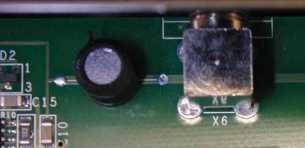
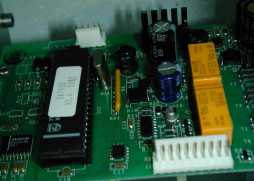
Soldering and Brazing are joining processes where parts are joined without
melting the base metals. Soldering filler metals melt below 840
°F. Brazing filler metals melt above 840 °F. Soldering is
commonly used for electrical connection or mechanical joints, but brazing is
only used for mechanical joints due to the high temperatures involved.
Soldering and Brazing Benefits
- Economical for complex assemblies
- Joints require little or no finishing
- Excellent for joining dissimilar metals
- Little distortion, low residual stresses
- Metallurgical bond is formed
- Sound electrical component connections
|
 |
Soldering and Brazing Issues
We can help optimize your joining process variables. Evaluate your current
joining parameters and techniques. Help eliminate common joining problems
and discontinuities such as those listed below:
Soldering and Brazing Joining Problems
- No wetting
- Excessive wetting
- Flux entrapment
- Lack of fill (voids, porosity)
- Unsatisfactory surface appearance
- Base metal erosion
|
 |
If your company is experiencing these or other soldering or brazing problems you
can engage AMC to improve
your soldering or brazing processing. Hire our consultant to act as your
soldering or brazing specialist.
Contact Information
- Telephone
-
407-880-4945 -------- (Consulting is only available for customers)
- FAX
-
CompanyFAX
- Postal address
(greater Orlando area)
-
AMC
-
2500 Emerald Tree Ln
-
Apopka, FL 32712
- Electronic mail
- General Information:
consulting@WeldingEngineer.com
Customer Support:
consulting@WeldingEngineer.com
Webmaster:
consulting@WeldingEngineer.com
|